Why Should AI Chatbots Be Applied in Vietnam’s Tourism Industry?
1. AI Chatbots Deliver Smart, Real‑Time Travel Advice
Using Website Data
Modern AI chatbots can “understand” and extract information
directly from a business’s website. Unlike traditional scripted bots, AI
chatbots analyse content such as room rates, amenities, policies, and
promotions to provide accurate, natural responses within seconds.
For hotels—where guests often ask detailed questions before
booking—this capability is invaluable. It ensures customers receive fast,
precise answers that build trust and increase booking conversions.
2. Expanded Knowledge Through External Training
Relying solely on website data limits a chatbot’s potential.
The true power of AI lies in its ability to learn from additional sources such
as internal documents, sales scripts, company policies, and travel guides.
With this extended training, the chatbot becomes a
knowledgeable “virtual employee” capable of:
- Providing
in‑depth travel recommendations
- Sharing
destination insights, seasonal events, and local tips
- Supporting
staff with consistent, accurate information
This transforms the chatbot from a simple Q&A tool into
a comprehensive travel advisory system.
3. 24/7 Availability – Never Miss a Customer Again
Human staff need rest. AI does not.
This is especially critical for:
- International
tourists dealing with time zone differences
- Gen
Z travellers who often search for deals late at night
- Customers
on platforms like Agoda, Booking.com, and TripAdvisor who expect
instant answers
Without a chatbot, businesses risk losing potential guests
who will quickly move to competitors if they wait too long for a response.
AI chatbots provide instant, multilingual support 24/7,
ensuring no customer inquiry is ever missed—an essential advantage in Vietnam’s
rapidly growing tourism market.
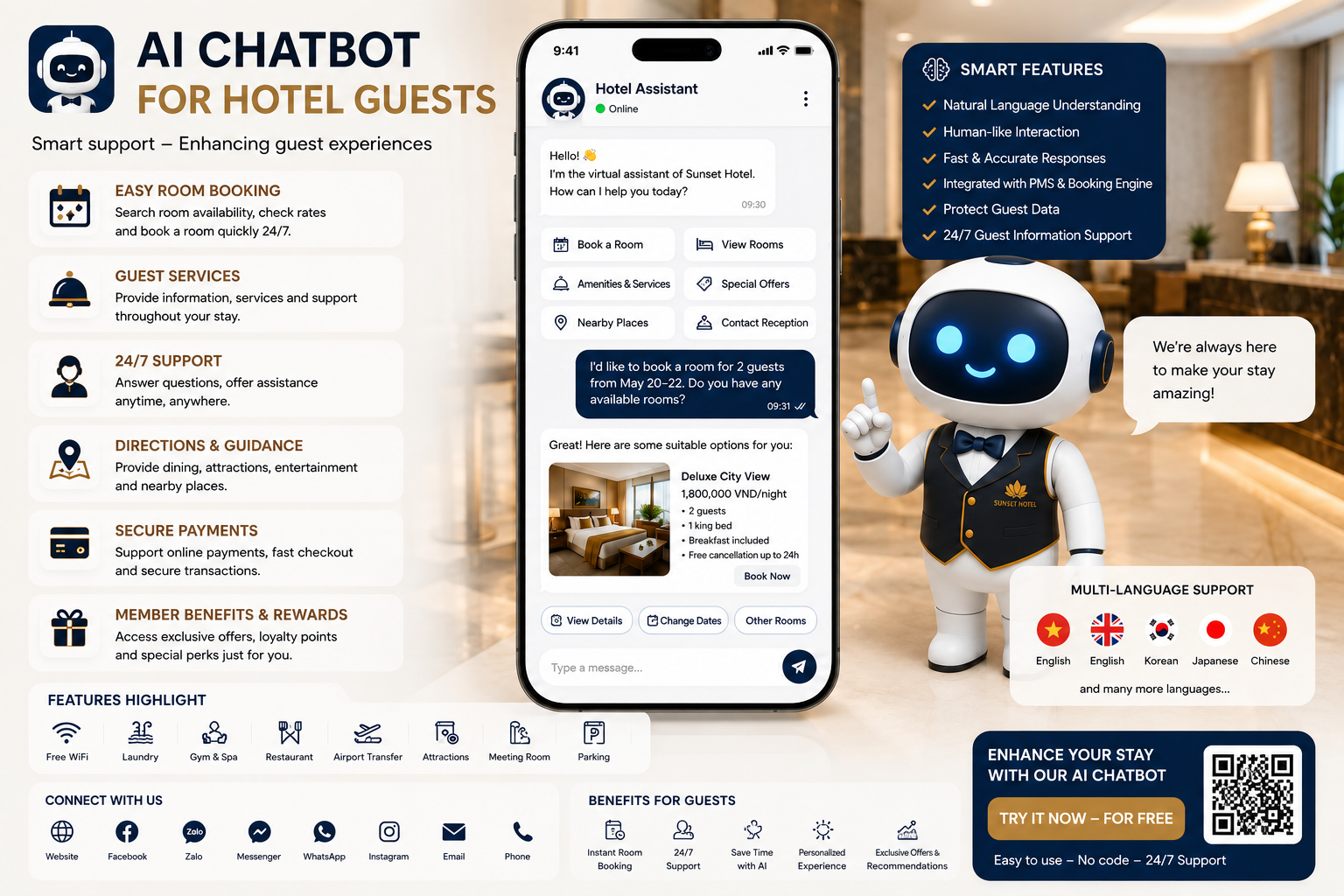
4. Natural, Human‑Like Communication That Enhances Guest
Experience
Today’s travellers expect clarity, speed, and
personalization. AI chatbots can:
- Communicate
naturally and contextually
- Guide
guests through room selection and booking
- Generate
visual content such as room‑view videos
- Recommend
the best room options based on preferences and budget
This level of personalization increases satisfaction and
strengthens customer loyalty.
5. Optimizing Hotel Operations
AI chatbots support more than customer service—they also
streamline internal processes:
- Assisting
new staff with complex inquiries
- Ensuring
consistent communication of policies and terms
- Reducing
workload and operational costs
- Collecting
customer feedback to improve service quality
By standardizing information and automating routine tasks,
hotels can operate more efficiently while maintaining high service standards.
6. Increasing Revenue Through Personalized Upselling and
Cross‑Selling
A well‑trained AI chatbot doesn’t just answer questions—it
actively drives revenue.
Based on customer conversations, it can recommend:
- Airport
or bus station transfers
- Spa
services
- Restaurants
- Local
tours and activities
- Group
travel packages
Unlike human staff who may overlook upsell opportunities, AI
chatbots consistently offer relevant suggestions, boosting both guest
satisfaction and hotel revenue.
7. A Clear Competitive Advantage
Most small and medium‑sized hotels in Vietnam still lack AI
chatbot support. This creates a significant opportunity for early adopters to
stand out.
In an industry where experience determines everything,
offering instant, intelligent, and personalized service gives hotels a powerful
competitive edge.
8. Scalability and Seamless Integration
AI chatbots integrate effortlessly with websites and social
platforms such as:
- Facebook
Messenger
- Zalo
- Instagram
- Other
booking channels
This creates a unified digital ecosystem that ensures
consistent service across all customer touchpoints.
Conclusion
Implementing AI chatbots in Vietnam’s tourism and hotel
management industry is no longer a trend—it is a strategic move that directly
impacts competitiveness and customer satisfaction.
In summary, AI chatbots deliver four core values:
- Smart:
Understand and synthesize website data for accurate responses
- Knowledge‑rich:
Learn from external documents for deeper consultation
- Always
available: Operate 24/7 without missing any customer
- Natural:
Communicate like humans to enhance the guest experience
Hotels that embrace AI today will lead the tourism industry
of tomorrow.
0 Comments
No data