Increasing Challenges in Recruitment
Increasing Challenges in Recruitment
Before recognizing the value that AI brings, it is essential
to understand the existing challenges within recruitment processes. As your
document notes, “the recruitment process is slow… recruiters often spend
many hours reviewing resumes” and this inefficiency has become increasingly
costly.
First, recruitment remains time‑consuming. Reviewing CVs,
coordinating interviews, and responding to candidate inquiries require
significant manual effort. In a competitive talent market, delays can cause
organizations to lose strong candidates to faster‑moving competitors.
Second, recruitment is difficult to scale. A recruiter can
only manage a limited number of applicants effectively. When hiring demands
increase—whether due to business expansion or mass recruitment needs—this
limitation becomes a major bottleneck.
Third, decision‑making lacks consistency. Human evaluations
are susceptible to bias, fatigue, and subjective judgment. As your document
states, “human judgments are easily influenced by prejudice, fatigue or
subjective feelings,” which can lead to missed opportunities or poor hiring
decisions.
Finally, candidate expectations have evolved. Modern
applicants expect quick responses, transparent communication, and a seamless
application experience. When organizations fail to meet these expectations,
candidates disengage quickly.
These challenges highlight the need for smarter, faster, and
more scalable recruitment solutions—precisely where AI delivers significant
value.
Why AI Is Important in Recruitment
1. Speed and Efficiency
AI dramatically accelerates document and CV processing.
Instead of manually reviewing hundreds of applications, AI systems can analyze
and rank candidates within minutes. This allows recruiters to focus their time
on the most promising profiles.
Speed is not merely a convenience—it directly impacts hiring
success. In competitive industries, top candidates are often hired within days.
Organizations relying solely on manual processes simply cannot keep pace.
2. Automation of Repetitive Tasks
A large portion of recruitment work is administrative. Tasks
such as CV screening, interview scheduling, and answering common questions
consume time but add limited strategic value.
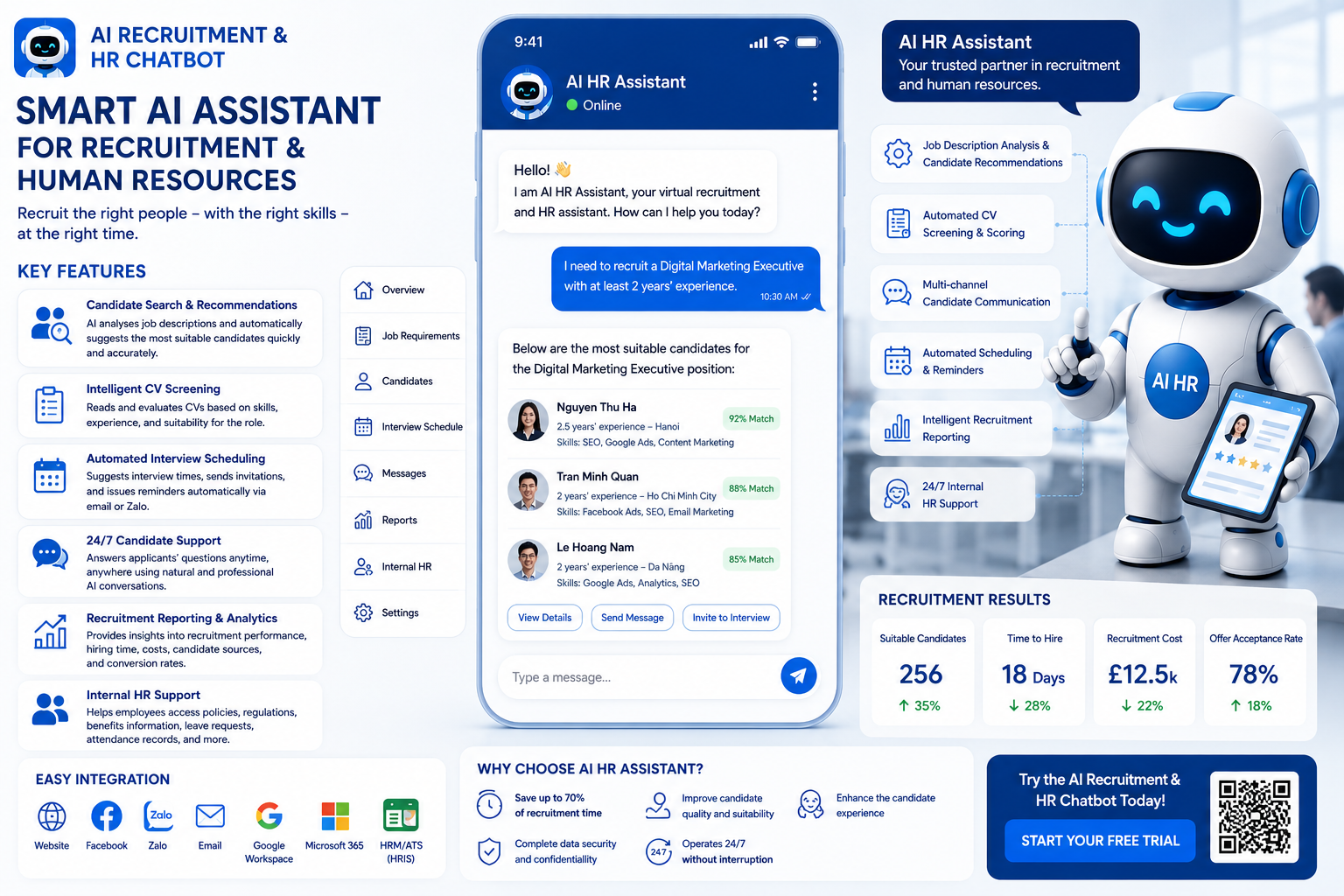
AI automates these functions. Chatbots can manage initial
candidate interactions, while AI tools extract and organize CV data. This
reduces operational workload and enables recruiters to prioritize higher‑value
activities such as interviewing and decision‑making.
3. Improved Candidate–Job Matching
Traditional keyword‑based screening is limited and often
inaccurate. AI can analyze context, experience, and behavioral patterns to
identify candidates who genuinely fit the role.
By learning from past hiring outcomes and performance data,
AI continuously enhances its recommendations—improving hiring quality and
reducing costly mismatches.
4. Reduced Bias
Human bias—conscious or unconscious—can influence hiring
decisions. As your document notes, “factors such as gender, age or
background sometimes impact how candidates are evaluated.”
AI helps mitigate this by focusing on objective criteria
such as skills, experience, and competencies. While AI cannot eliminate bias
entirely, when implemented responsibly, it provides a more consistent and
transparent evaluation framework.
5. 24/7 Availability
Recruitment is no longer confined to office hours.
Candidates apply at all times, including evenings and weekends.
AI systems, especially chatbots, operate continuously. They
respond instantly to inquiries, guide candidates through the application
process, and maintain engagement—ensuring no opportunity is lost due to delayed
responses.
Specific Recruitment Context in Vietnam
Vietnam offers a particularly favorable environment for AI‑powered
recruitment tools.
First, it is a mobile‑first market. Most candidates rely on
smartphones for job searches and communication.
Second, communication habits are highly chat‑oriented.
Platforms such as Facebook Messenger and Zalo dominate daily interactions. As
your document highlights, “candidates often feel more comfortable chatting
instead of filling out long forms.”
Third, competition for talent—especially in technology,
sales, and customer service—is intensifying. Speed and responsiveness have
become decisive factors in attracting qualified candidates.
These characteristics make AI chatbots especially effective
in the Vietnamese recruitment landscape.
Benefits of AI Chatbots for Vietnamese Businesses
1. Instant Response and Higher Conversion Rates
Vietnamese candidates frequently apply to multiple jobs
simultaneously. If a company responds slowly, candidates quickly move on.
AI chatbots provide immediate engagement—greeting
applicants, answering basic questions, and guiding them through the application
process. This significantly increases the likelihood that candidates complete
their applications.
2. Seamless Integration With Popular Platforms
Unlike traditional systems that rely on email or websites,
AI chatbots integrate directly with messaging platforms.
Candidates can interact with chatbots on Facebook Messenger
or Zalo without switching applications. This reduces friction and enhances
convenience.
3. Reduced HR Workload
HR teams spend substantial time addressing repetitive
questions about salary, working hours, or job requirements.
AI chatbots automate these interactions. By filtering out
unqualified candidates and handling common inquiries, they free HR teams to
focus on strategic tasks.
4. Automated Candidate Screening
Chatbots can conduct initial screening by asking targeted
questions about experience, tenure, or technical skills.
This ensures that only qualified candidates proceed to the
next stage, saving employers time and accelerating decision‑making.
5. Enhanced Candidate Experience
Candidate experience is a critical component of employer
branding. Poor interactions can damage reputation and reduce future applicant
interest.
AI chatbots deliver a smooth, interactive experience with
clear instructions and instant feedback. This fosters a positive impression and
increases candidate satisfaction.
6. Data‑Driven Insights
AI chatbots collect valuable data throughout the recruitment
journey. Organizations can analyze this information to identify bottlenecks,
understand candidate behavior, and refine recruitment strategies.
For example, businesses can track drop‑off points, confusing
questions, or high‑performing sourcing channels—turning recruitment into a
measurable, continuously optimized process.
7. Cost Reduction
Recruitment can be expensive, especially when relying on
large HR teams or inefficient advertising.
AI chatbots reduce costs by automating tasks, improving
efficiency, and increasing conversion rates. Companies achieve better outcomes
with fewer resources, enhancing overall ROI.
Notes for Successful Deployment
While AI offers substantial benefits, effective
implementation requires thoughtful preparation.
First, organizations must establish clear processes. AI
performs best when workflows and evaluation criteria are well‑defined.
Second, data quality is critical. Inaccurate or inconsistent
data leads to unreliable results.
Third, chatbot design matters. Conversations must be
natural, intuitive, and user‑friendly. Poorly designed chatbots can frustrate
candidates and undermine effectiveness.
Finally, integration is essential. AI systems must connect
seamlessly with existing tools such as Applicant Tracking Systems (ATS) and
communication platforms.
The Future of Recruitment in Vietnam
AI is not a temporary trend—it is reshaping the future of
recruitment. As technology advances, we will see more sophisticated
capabilities such as predictive hiring, voice‑based interactions, and deeper
personalization.
In Vietnam, where digital transformation is accelerating and
competition for talent is intensifying, organizations that adopt AI will gain a
significant advantage. Those slow to adapt risk falling behind.
Conclusion
Recruitment is undergoing a profound transformation.
Traditional methods can no longer meet the expectations of modern businesses or
candidates.
AI provides the tools needed to overcome these
challenges—enhancing speed, accuracy, efficiency, and overall experience.
In Vietnam, the impact is even more pronounced due to mobile‑first
behavior and chat‑based communication. AI chatbots offer powerful solutions for
engaging candidates, optimizing processes, and improving hiring outcomes.
Ultimately, AI is not meant to replace recruiters but to
empower them. By automating repetitive tasks and delivering actionable
insights, AI enables HR professionals to focus on what matters most: building
relationships and making informed hiring decisions.
Organizations that embrace this shift will not only improve
their recruitment performance but also secure a sustainable competitive
advantage in the talent market.
0 Comments
No data