V I S M A R T T E C H

Loading

Chatbot AI in Vietnam's Tourism Industry: From Support Tool to Strategic Asset for the “Virtual Living” Generation

Chatbot AI in Vietnam's Tourism Industry: From Support Tool to Strategic Asset for the “Virtual Living” Generation

1. Context: Vietnam tourism enters the technology race
Vietnam’s tourism sector is booming, but rising demand brings new pressure: faster service, smoother experiences, and deeper personalization. In today’s hyper‑competitive landscape, technology—especially artificial intelligence—is no longer optional. It’s the backbone of modern tourism.
Industry reports consistently show AI at the centre of digital transformation. It automates workflows, personalizes interactions, and boosts operational efficiency. Among all AI applications, chatbots stand out as one of the most practical and impactful tools.
2. AI Chatbot: From “automatic reply” to “smart travel assistant”
Automating and optimizing operations
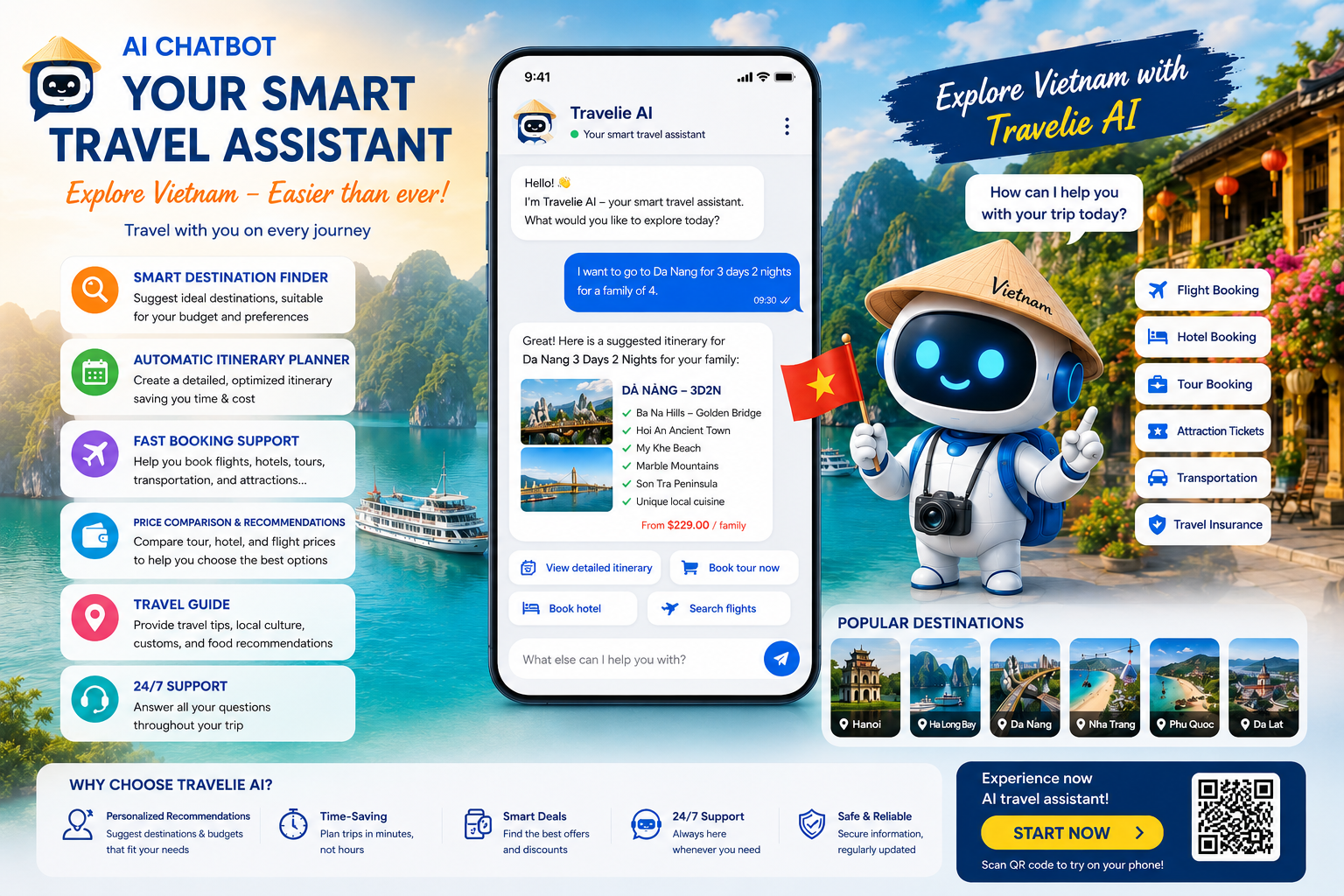
AI chatbots tackle one of tourism’s biggest pain points: overwhelming repetitive tasks. Price inquiries, itinerary details, booking support—AI handles them all within seconds. Guests can finalize tours, confirm bookings, and make payments without waiting for staff. The result: lighter workloads, lower costs, and smoother operations.
Enhancing customer experience
Chatbots deliver instant, accurate responses in any language. No queues, no delays—just immediate answers. They learn from conversations, understand context, and personalize recommendations. Whether on a website, Zalo, or Messenger, they provide 24/7 support that feels seamless and human‑like.
Personalizing travel itineraries
Today’s travellers want experiences tailored to them—not generic tour packages. AI chatbots can design itineraries based on personal preferences, travel style, and budget. They suggest destinations, map out daily schedules, and help travellers build trips that feel uniquely theirs. This level of personalization boosts satisfaction and encourages repeat visits.
3. Chatbot AI and the shift in tourism business models
AI doesn’t just streamline operations—it reshapes how businesses create value. Traditional marketing relied on flyers and word‑of‑mouth. Now, chatbots can craft individualized travel plans that elevate emotional and experiential value. This shift helps Vietnamese tourism businesses understand customers more deeply and deliver journeys that feel meaningful, memorable, and tailor‑made.
4. “Virtual living tourism”: A trend redefining customer behaviour
Social media has transformed travel, especially for younger generations. Trips are no longer just vacations—they’re content opportunities. As content creation surges, AI chatbots can automatically generate short promotional videos showcasing Vietnam’s landscapes, culture, cuisine, and festivals. These clips spark viral moments on TikTok, YouTube, and Instagram, blending real‑world travel with digital storytelling. Tourism becomes part of a broader content ecosystem where online and offline experiences reinforce each other.
6. Chatbot AI — the deciding factor for competitive advantage
In a crowded tourism market, AI delivers clear strategic benefits:
  • Faster response times: manage thousands of inquiries simultaneously
  • Lower costs: reduce staffing for repetitive tasks
  • Higher revenue: improve conversion rates
  • Better experiences: personalize every interaction
Most importantly, AI enables a shift from traditional operations to data‑driven decision‑making—were insights from customer behaviour guide strategy and innovation.
7. Conclusion
Chatbot AI is becoming a cornerstone of Vietnam’s tourism digital transformation. Beyond operational efficiency, it unlocks new ways to engage travellers, personalize journeys, and elevate the entire customer experience. For tourism businesses, AI is no longer just a tool—it’s a strategic advantage shaping the future of travel.

Releted Tags

Social Share


Releted Post

Why Should AI Chatbots Be Applied in Vietnam’s Tourism Industry?

What Is the Role of AI Chatbots in Hotel Management? As Vietnam’s tourism industry rebounds and competition intensifies, technology adoption is no longer optional—it is a strategic necessity. Among the most transformative technologies, AI chatbots are emerging as essential digital assistants for tourism businesses, especially hotels. They not only streamline operations but also elevate the customer experience, which is the defining factor in the service sector.

AI Chatbot Revolution: The Powerful Virtual Assistant Transforming Vietnam’s Tourism Industry

AI chatbots have evolved far beyond simple automated response tools. Today, they function as comprehensive content creation ecosystems and have become indispensable assets for travel businesses seeking efficiency, personalization, and competitive advantage.

Why Should AI Chatbots Be Applied to Dentistry?

What benefits do AI Chatbots bring to the dental industry? What is the future of AI Chatbots for dental businesses? In the era of medical digitalization, dentistry is no longer defined solely by clinical expertise. Patient expectations, service quality, and operational efficiency now play equally decisive roles. AI Chatbots have emerged as a transformative technology, enabling dental clinics to evolve from traditional service models into intelligent, automated, customer centric ecosystems.
Why VIS Chatbot AI Should Be Applied in the Education Sector

Revolutionizing Education: AI Chatbots as the Key to the Academic Future Education is undergoing a profound transformation. As stated in the document, “Education is no longer limited to the traditional classroom environment.” With the rapid advancement of artificial intelligence—especially large language models such as ChatGPT, Claude, and Gemini—personalized learning at scale has become not only possible but essential.

0 Comments

  • No data

Post Comment

Ready To Get Free Consulations For Any Kind Of It Solutions ?